

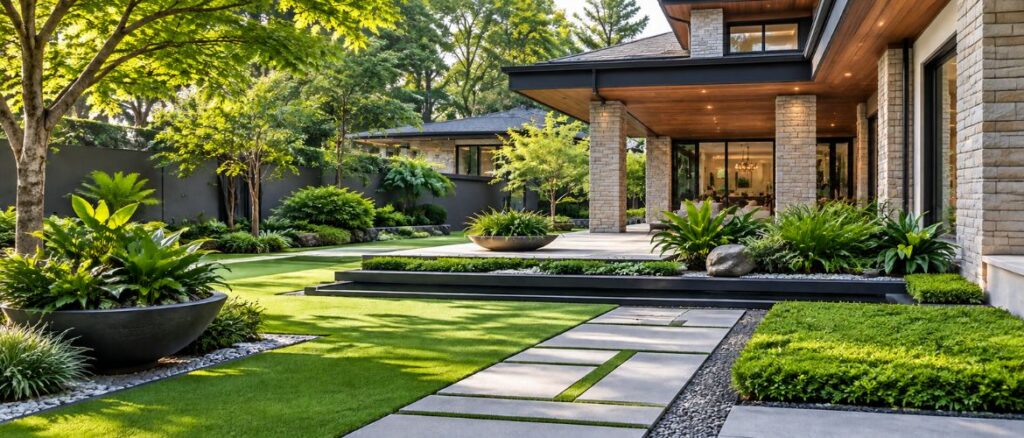
How to Design a Landscape That’s Both Beautiful and Eco-Friendly
It is no surprise that many homeowners in Calabasas would want to make their yards not only beautiful but eco-friendly as well. Creating an eco-friendly landscape can be especially challenging in Calabasas due to the area’s dry summers and warm climate. However, the right plants, as well as design elements, can help one achieve a stunning landscape that will still conserve water and thrive no matter how hot it gets outside.
Choosing the Right Plants and Arrangements
To begin designing an eco-friendly yard, one must understand what plants can thrive in Calabasas and how to arrange them for maximum conservation. While some of the best plants to use in a water-conserving garden are native to California, there are other climate-adapted options that should be considered. Many non-native plants, if well cared for, can survive the area’s dry summers and still look spectacular in one’s yard. While a yard made up solely of native plants will certainly conserve water, using climate-adapted non-native species along with one’s native flora can create a more interesting design.
Once a list of desired plant species is created, it is important to divide them into groups based on their water needs. This is called hydrozoning and allows one to make the most of their irrigation.
Designing Around Calabasas’ Climate
When designing one’s eco-friendly yard, it is paramount to keep in mind what challenges the local climate presents. For Calabasas homeowners, the warm and dry summer climate means that any landscape design must be able to withstand the heat.
Using mulch in one’s garden can help insulate the roots of one’s plants and ensure they do not dry out as quickly, which allows them to withstand the heat better. Similarly, placing trees and large shrubs in strategic locations can provide much-needed shade that will help cool both the landscape and the home.
Another detail that can make a big difference in an eco-friendly yard is the type of soil. To ensure one’s plants get enough water, one must consider the water retention level of their soil.
Balancing Softscape and Hardscape Elements
An eco-friendly landscape made up solely of plants is not necessarily a beautifully designed one. Creating a pleasing yard requires one to strike a balance between softscape and hardscape elements. Hardscape features such as patios and walkways add structure to one’s yard and provide interesting elements to sit and enjoy one’s scenery. At the same time, such features reduce the amount of lawn one must maintain. To that end, Pristine Gardenscape also offers paver installation service, which allows the company to provide one with a wider range of landscape design and construction services. The addition of hardscape elements to one’s yard can significantly reduce the amount of water needed to maintain one’s landscape.
Another benefit of paver elements such as patios and driveways is the reduction in erosion. This can be especially important in a yard on a slope, where water running down one’s yard can wreak havoc on one’s landscaping. Paver installations allow one to create a surface that will prevent erosion while conserving water.
The Right Irrigation Can Make All the Difference
One cannot overlook the importance of the right irrigation when conserving water in one’s yard. To accomplish that, it is best to make sure one’s system not only waters one’s yard efficiently but also lasts for years to come. A drip irrigation system should be installed to make sure that plants get enough water directly to their roots. This is much more efficient than standard sprinklers since overhead irrigation tends to waste a lot of water due to evaporation and overspray. It is best to invest in a smart irrigation controller, which will help one conserve water even further by adjusting one’s system so that it only waters one’s yard when necessary. Overall, the right irrigation setup for an eco-friendly yard can make all the difference.
Designing Your Yard for Longevity
When designing an eco-friendly yard, it is important to keep in mind that it should be enjoyable for many years to come. One should avoid getting carried away trying to create a complicated yard design made up entirely of high-maintenance plants. Such a yard will inevitably end up neglected and unable to deliver on its intended sustainability and beauty promises. Instead, it is best to design a space around climate-appropriate and easy-to-care-for plants and use hardscape elements to reduce the maintenance even further. After one has completed their design, it is important to make sure that the plants they selected are perennials so that they do not have to be replanted every year. Such considerations can make a huge difference in the long-term appearance and maintenance of one’s eco-friendly yard.
Designing a Landscape With Added Benefits
While one cannot ignore the practical aspects of an eco-friendly landscape, it is also important to select plants that offer additional benefits. Some plants can provide habitat for local wildlife, while others attract pollinators such as hummingbirds and butterflies. Doing so not only provides an abundance of life to one’s yard, but it often adds to the beauty as well, as many pollinators brighten up one’s scenery.
Bringing It All Together
Having one’s yard designed by professionals can greatly reduce the complexity of the task, as one can rely on them to make decisions that will benefit one’s landscape for years to come. Pristine Gardenscape specializes in landscape design and construction as well as paver installation and is ready to help you create a custom eco-friendly design for your property in Calabasas.
